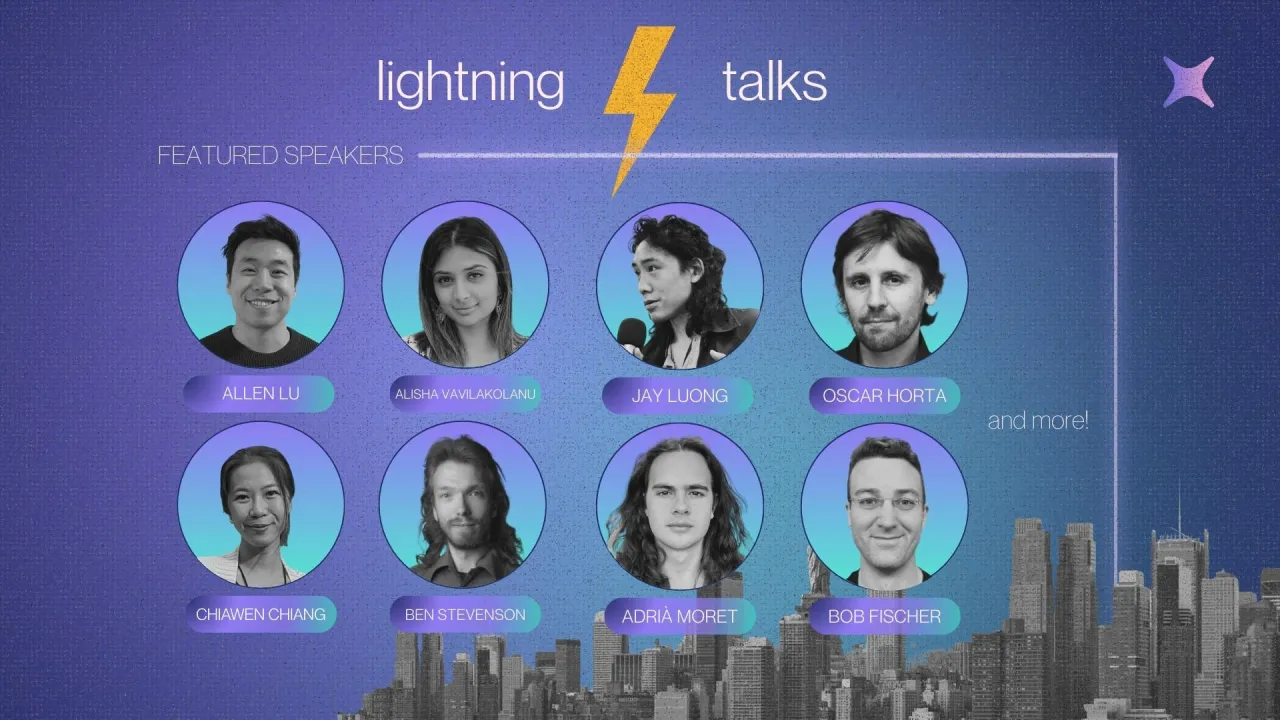
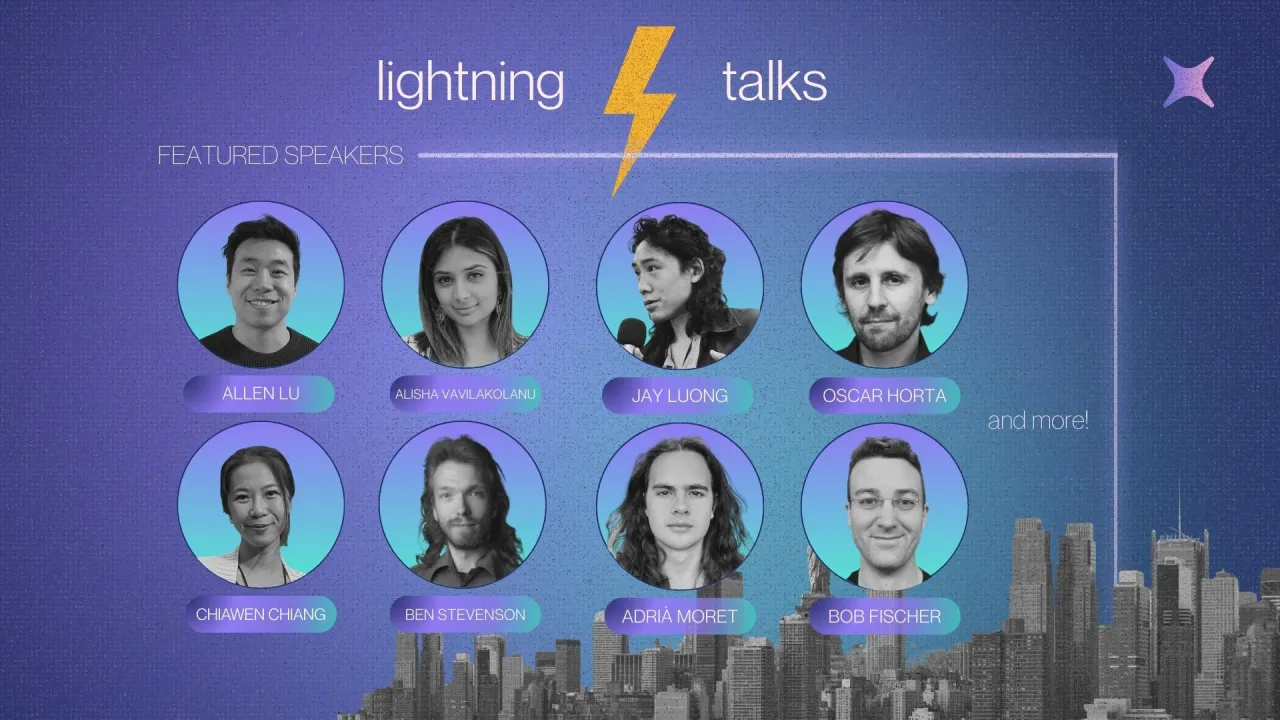
lightning talks (non-human animal focus)
Information
5-minute lightning talks on topics pertaining to AI, Animals, and Digital Minds (descriptions below)
Note: All talks are specific to the individuals giving them, and not necessarily representative of the views of their organisation
- 12:00PM Adrià Moret (Board Member of UPF-Center for Animal Ethics): Non-Human Welfare and AI Alignment.
- 12:10PM Dr Erin B Ryan (Cofounder, Animals in the Room): Animals in the Room: Bringing Animals from Behind the Data
- 12:20PM Christopher Berry (Executive Director, Nonhuman Rights Project): How You Can Stop the Tautology Infecting Our Courts That Only Humans Matter
- 12:30PM Allen Lu & Alisha Vavilakolanu (Futurekind Fellows): Harnessing AI to Shape Animal-Friendly Urban Spaces
- 12:40PM Chiawen Chiang (Fish Behavior and Welfare Researcher, NYU and Welfare Footprint Institute): Mapping Global Aquaculture Expansion: What species diversity means for animal welfare
- 12:50PM Lee Wall (Data Scientist and Independent Researcher): Reinforcement Learning from Animal Feedback
- 1:00PM Diane Kim (Research Advocate, Earth Species Project): NatureLM-audio Demo: Exploring Animal Sounds with AI.
- 1:10PM Ben Stevenson (Wild Animal Welfare Advocate): Aligning Policymakers on Wild Animal Welfare
(Dr Erin B. Ryan) Dr. Erin Ryan, co-director and co-founder of AiR, will speak about the extent to which we can make claims from AI-assisted data gathered from non-human animals, data that seeks to capture their interests and expressions with greater nuance and clarity. She will explore the ethical gaps and guardrails we must consider to ensure that knowledge in this rapidly expanding field is equitable, trustworthy, and impactful.
(Adrià Moret) Adria and Oscar will explain a project we are starting, which aims to increase the likelihood that future powerful AI systems possess a nuanced, basic level of concern for the welfare of non-human animals and potentially sentient AI systems. They will motivate the importance of this project and describe its two steps: (1) Develop benchmarks evaluating the degree to which frontier language models have a basic, nuanced concern for the welfare of sentient non-human beings along different dimensions in ways that are attractive and useful for leading AI companies. (2) Achieve the inclusion of general, basic non-human welfare principles in the documents and instructions used to align frontier AI systems.
(Christopher Berry) New York's highest court ruled that Happy the elephant has no rights because only humans matter "because they are humans." This tautological reasoning is spreading through our legal system, creating a barrier against recognizing any nonhuman sentience. In this talk I will explain why this precedent threatens all sentient beings and how everyone—not just lawyers—can help dismantle this dangerous logic.
(Allen Lu & Alisha Vavilakolanu) This would be a talk on how we can start leveraging AI to create more animal-friendly urban spaces. Allen and Alisha have been working on a project - in conjunction with the Electric Sheep team as part of their Futurekind Fellowship - on a conversational AI tool/app that empowers advocates, city planners, and urban designers draft more animal-friendly and accurate policies for cities. They're calling this Pawlicy Pal, similar to ChatGPT in its interface and functionality.
(Chiawen Chiang) Analyzing the Food and Agriculture Organization's historic data, Chiawen discovered a pattern that challenges conventional assumptions about animal welfare and agricultural economics: species with higher welfare risks consistently command higher prices, while lower-risk species cost significantly less and contribute more to global production. This finding suggests that ethical and economic goals in aquaculture may actually align rather than conflict. However, the industry's pace of diversification - adding 56 new species in 2021 alone-may demand attention. Depending on which species are prioritized, this expansion could either dramatically worsen animal welfare or minimize welfare concerns. Her ongoing research examines whether this trend of rapid species diversification should reshape advocacy strategies and policy priorities in aquaculture development.
(Lee Wall) One of the central tensions between traditional AI safety approaches and emerging thinking in the AI x Animals space is between aligning AI to the fuzzy, inferred preferences of humans, versus instilling AI with ethics that may be at odds with median human preferences, or which could be construed as "indoctrinating" the AI with a particular worldview.
Lee proposes that instead of hardcoding ethics (a dangerous game), we should work to extend existing alignment frameworks to infer the fuzzy values and preferences of other sentients. This entails increasing the surface area for preference expression, so that future advanced multimodal models are able to infer and account for animal preferences in addition to human ones. They say animals here for catchiness and convenience, but this applies in the general case of any possible sentient being in an AI's sphere of influence. We should ensure all sentient beings have a mode of preference expression to models that can affect them, and that models assign nonzero moral weight to anything potentially sentient.
(Diane Kim) In this lightning talk, Diane will share a demo of NatureLM-audio, Earth Species Project's flagship bioacoustics model, which is now available in a no-code UI. This allows anyone to upload audio containing animal sounds in it and ask questions directly to the model. They'll walk through how it works, and highlight potential use cases and applications of how this tool could reveal deeper insights into the communication and intelligence of non-human animals.
(Ben Stevenson) Introduction of the Center for Wild Animal Welfare, Ben's new organisation with Richard Parr which works to build policymaker support for wild animal welfare. He'll set out why this work looks important given TAI.