Hydrogen Fuel Cells
Products
Information
On the surface of it, there’s very little to distinguish a fuel-cell car from one that runs on gasoline or diesel. Once its fuel has been topped up — which takes just a few minutes — the car’s range is over 500 kilometers. But there is one crucial difference: an electrical powertrain produces zero local emissions. And that’s why hydrogen technology is sure to figure prominently on the road to low-carbon transportation, especially when it comes to electrifying heavy trucks.
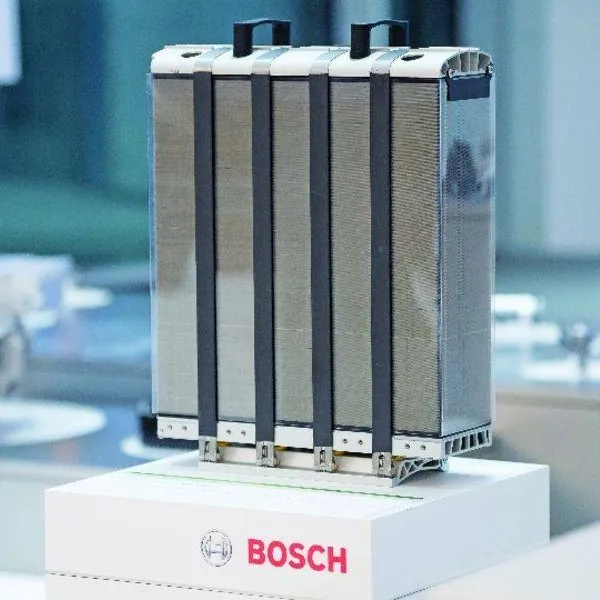
Just as the gasoline and diesel variants of combustion engines are constantly being improved, the electromobility side is seeing purely battery-electrical powertrains and fuel cells being developed side by side. Bosch has already made this technology neutrality its own, with the result that these innovative fuel-cell stacks are expected to come off the production lines at its Bamberg plant as early as 2022.
A single fuel cell generates just a small amount of power, which is why engineers stack them in layers separated by bipolar plates. In a passenger car, putting roughly 400 fuel cells together will produce up to 120 kilowatts of power output (163 horsepower). For the higher power requirements of commercial vehicles, the number of stacks can be increased accordingly.