015IC - Essential in Prostate Cancer Focal Therapy: From the Classroom to the Operating Room Utilizing Novel Techniques and High Quality Clinical Evidence
Friday, May 15, 2026 4:00 PM to 6:00 PM · 2 hr. (America/New_York)
151A
Instructional Course
Oncology: Prostate
Information
Course Description: The course is designed to provide urologists (attendings, fellows, residents) and advanced practice providers a foundational knowledge of the evidence supporting focal therapy for localized prostate cancer. The instructors will critically review retrospective data and prospective trials focusing on patient populations and selection, oncological outcomes measured, and patient-reported quality of life. The information will be provided in a case-based format with a focus on patient-physician communication skills training to describe the risks/benefits of focal therapy. appropriately set patient expectations and boost the appropriateness of essential follow-up including post treatment biopsies using behavioral psychology techniques used by negotiation experts. The goal is to provide adequate tools to expand physician-patient trust and improve shared-decision making. Further, we will implement a novel flipped classroom structure to teach basics of quality-of-life assessment adapted to focal therapy and provide novel methods to assess these outcomes in all settings: academic practice and private practice. A new dimension for the 2025/2026 course application is incorporating videos of techniques with each ablation technology linked with the case presentation and learning objectives. Our goal remains to provide an educational course agnostic of focal therapy technology.
Learning Objective 1:Master a comprehensive fund of knowledge about retrospective studies and prospective clinical trials in focal therapy from 2010 to present. Learning objective number 1 will be focused on presenting and comparing patient populations across studies. These concepts will be taught using case-based discussion which will translate into a foundational knowledge of appropriate selection criteria for focal therapy. The discussion will be nuanced to describe patient selection based on diagnostic modality: transrectal or transperineal prostate biopsy and MR-targeted or systematic-based biopsy only to generalize the findings to all populations of participants including academic and private-based office practice and rural or urban settings. A new edition for the 2025/2026 course is providing the didactic heavy materials on trials/clinical data/technology description in the pre-course material to maximize learning during the course at the AUA.
Learning Objective 2: Focus on oncologic based outcomes. The participants will be able to describe endpoints in studies and an emphases will be made to compare across studies. The goal of this objective is to provide participants a fund of knowledge to understand appropriate follow-up regimens and discuss risks and benefits with patients. In this objective, the instructors will provide a systematic communication tool for physicians and APPs to engage in shared decision making and obtain informed medical consent for focal therapy agnostic of treatment modality. The treatment modalities discussed will be limited to devices approved by the FDA for prostate tissue ablation or cancer-indication. In addition, a focus will be on documentation of patient-physician discussions and essential elements of goals of care for informed medical consent.
Learning Objective 3: Review quality of life data presented in retrospective studies and prospective clinical trials in focal therapy. An emphases in this objective will be on comparative data and a detailed discussion will include patient-reported quality of life data from radiation therapy trials and radical prostatectomy trials. This session will be highlighted by case based discussions of difficult patients and managing expectations. Specifically, the authors will go into detail about pitfalls in discussing sexual function outcomes including erectile function vs overall sexual satisfaction. The instructors will engage the audience and challenge them to provide responses to difficult patient situations including ejaculatory dissatisfaction, infertility, pelvic pain, and psychological erectile dysfunction.
Learning Objective 4: Approach each patient's cancer with an agnostic approach to device and energy source. Instead of focusing on a one-size fits all approach, the course faculty will describe their choice of device and energy source based on key characteristics for every case. The faculty has been chosen to represent experience with all currently available focal therapy devices and energy sources. No single device will be emphasized but the advantages of using a particular device for a specific case will be highlighted. The audience will be polled on current experience with devices and energy sources to guide the case-based discussion. Importantly, a session will be dedicated to providing a mission statement and guiding principles for starting a successful clinical focal therapy program. Attendees will be able to start and sustain a focal therapy program (reimbursement, hospital stakeholders) and they will be challenged to reflect on ethical issues providing a novel treatment modality.
Learning Objective 5: Confidently approach common and serious complications after focal therapy. The instructors will highlight cases with high-quality pictures and videos describing methods to identify complications (i.e. urethral strictures, rectal fistula) and techniques to overcome these setbacks. The learning objective will entail effective communication pre-treatment regarding complications and safe practices to prevent complications after focal therapy. The emphasis of the clinical cases will be to challenge the participants to approach each case thoughtfully and provide access to the experts after the course (email) to provide mentorship and guidance in these difficult cases.
Learning Objective 1:Master a comprehensive fund of knowledge about retrospective studies and prospective clinical trials in focal therapy from 2010 to present. Learning objective number 1 will be focused on presenting and comparing patient populations across studies. These concepts will be taught using case-based discussion which will translate into a foundational knowledge of appropriate selection criteria for focal therapy. The discussion will be nuanced to describe patient selection based on diagnostic modality: transrectal or transperineal prostate biopsy and MR-targeted or systematic-based biopsy only to generalize the findings to all populations of participants including academic and private-based office practice and rural or urban settings. A new edition for the 2025/2026 course is providing the didactic heavy materials on trials/clinical data/technology description in the pre-course material to maximize learning during the course at the AUA.
Learning Objective 2: Focus on oncologic based outcomes. The participants will be able to describe endpoints in studies and an emphases will be made to compare across studies. The goal of this objective is to provide participants a fund of knowledge to understand appropriate follow-up regimens and discuss risks and benefits with patients. In this objective, the instructors will provide a systematic communication tool for physicians and APPs to engage in shared decision making and obtain informed medical consent for focal therapy agnostic of treatment modality. The treatment modalities discussed will be limited to devices approved by the FDA for prostate tissue ablation or cancer-indication. In addition, a focus will be on documentation of patient-physician discussions and essential elements of goals of care for informed medical consent.
Learning Objective 3: Review quality of life data presented in retrospective studies and prospective clinical trials in focal therapy. An emphases in this objective will be on comparative data and a detailed discussion will include patient-reported quality of life data from radiation therapy trials and radical prostatectomy trials. This session will be highlighted by case based discussions of difficult patients and managing expectations. Specifically, the authors will go into detail about pitfalls in discussing sexual function outcomes including erectile function vs overall sexual satisfaction. The instructors will engage the audience and challenge them to provide responses to difficult patient situations including ejaculatory dissatisfaction, infertility, pelvic pain, and psychological erectile dysfunction.
Learning Objective 4: Approach each patient's cancer with an agnostic approach to device and energy source. Instead of focusing on a one-size fits all approach, the course faculty will describe their choice of device and energy source based on key characteristics for every case. The faculty has been chosen to represent experience with all currently available focal therapy devices and energy sources. No single device will be emphasized but the advantages of using a particular device for a specific case will be highlighted. The audience will be polled on current experience with devices and energy sources to guide the case-based discussion. Importantly, a session will be dedicated to providing a mission statement and guiding principles for starting a successful clinical focal therapy program. Attendees will be able to start and sustain a focal therapy program (reimbursement, hospital stakeholders) and they will be challenged to reflect on ethical issues providing a novel treatment modality.
Learning Objective 5: Confidently approach common and serious complications after focal therapy. The instructors will highlight cases with high-quality pictures and videos describing methods to identify complications (i.e. urethral strictures, rectal fistula) and techniques to overcome these setbacks. The learning objective will entail effective communication pre-treatment regarding complications and safe practices to prevent complications after focal therapy. The emphasis of the clinical cases will be to challenge the participants to approach each case thoughtfully and provide access to the experts after the course (email) to provide mentorship and guidance in these difficult cases.
Of Interest To
Advanced Practice Providers (APP)FellowsResidents
Speakers
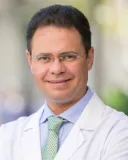
Andre Luis Abreu
Associate Professor of Clinical Urology and RadiologyKeck School of Medicine, USC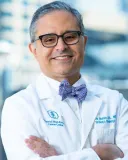
Behfar Ehdaie
Associate ProfessorMemorial Sloan Kettering Cancer Center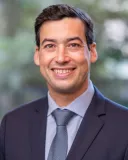
Jonathan Fainberg
Assistant ProfessorMemorial Sloan Kettering Cancer Center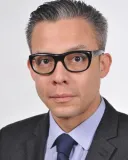
Rafael Sanchez-Salas
Associate ProfessorMcGill University
Kara Watts
Associate ProfessorMontefiore Medical Center, Albert Einstein College of MedicineRegistered attendees
Alberto Saldivar Luna
Urology ResidentHospital Regional de Alta Especialidad de Ixtapaluca (UNAM)
Henri Morgan
UrologistHospital das Clínicas, Faculty of Medicine, University of São Paulo (HCFMUSP)
Ignacio Tobia Gonzalez
Associate Profesor Urology Department Hospital Italiano de Buenos AiresLatin Ametrican Renal Cancer Group